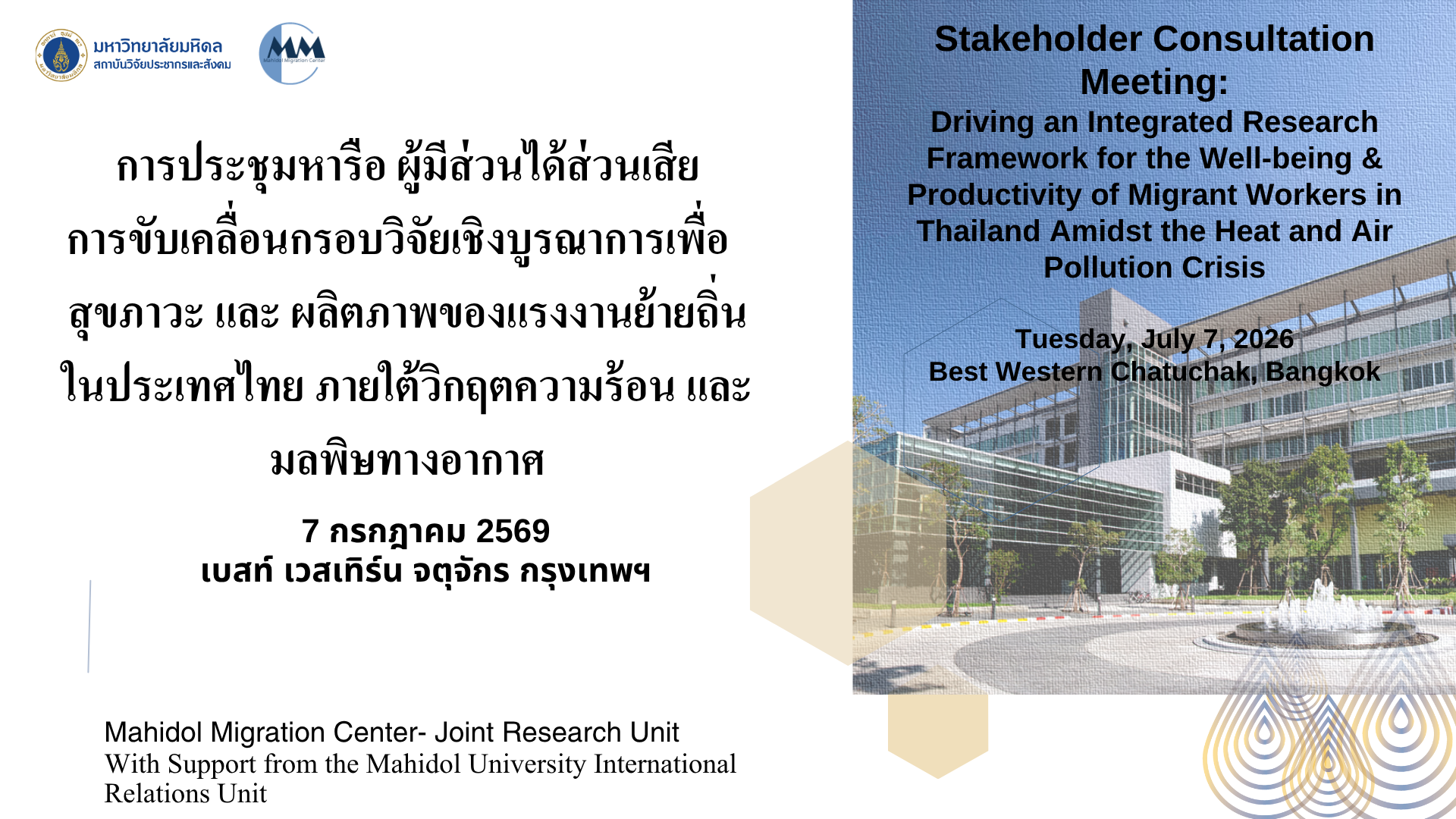
On 7 July 2026, the Mahidol Migration Center–Joint Research Unit (MMC-JRU), under the Institute for Population and Social Research, Mahidol University, convened a stakeholder consultation meeting on “Driving an Integrated Research Framework for the Well-being and Productivity of Migrant Workers in Thailand Amidst the Heat and Air Pollution Crisis.” The meeting focused on developing an integrated research framework that brings together climate change, health, and migration perspectives, with particular attention to the growing impacts of extreme heat and air pollution on the health and productivity of migrant workers in Thailand.
The discussion highlighted the heightened risks faced by migrant workers engaged in physically demanding and outdoor occupations, including construction and agriculture. Exposure to extreme temperatures and air pollution can increase the risk of heat-related and respiratory illnesses, while language barriers, limited access to welfare, and working conditions may further constrain workers’ ability to access health information and adapt to environmental risks. Addressing these interconnected challenges requires a stronger evidence base that considers climate, health, and migration together rather than as separate areas of study.
Approximately 20–25 participants, including experts, academics, representatives from government agencies, labour groups, the private sector, and non-profit organizations, took part in the consultation. The meeting featured discussions on Thailand’s policy framework and approaches to protecting migrant and informal workers, as well as international perspectives on the climate vulnerability of migrant workers in Southeast Asia. Participants also provided feedback on the proposed research framework, which will be used to further refine its scope and relevance to the needs of stakeholders. The consultation is expected to contribute to the development of evidence-based policy recommendations that can support better health, well-being, working conditions, and productivity among migrant workers in Thailand in a sustainable and equitable manner.