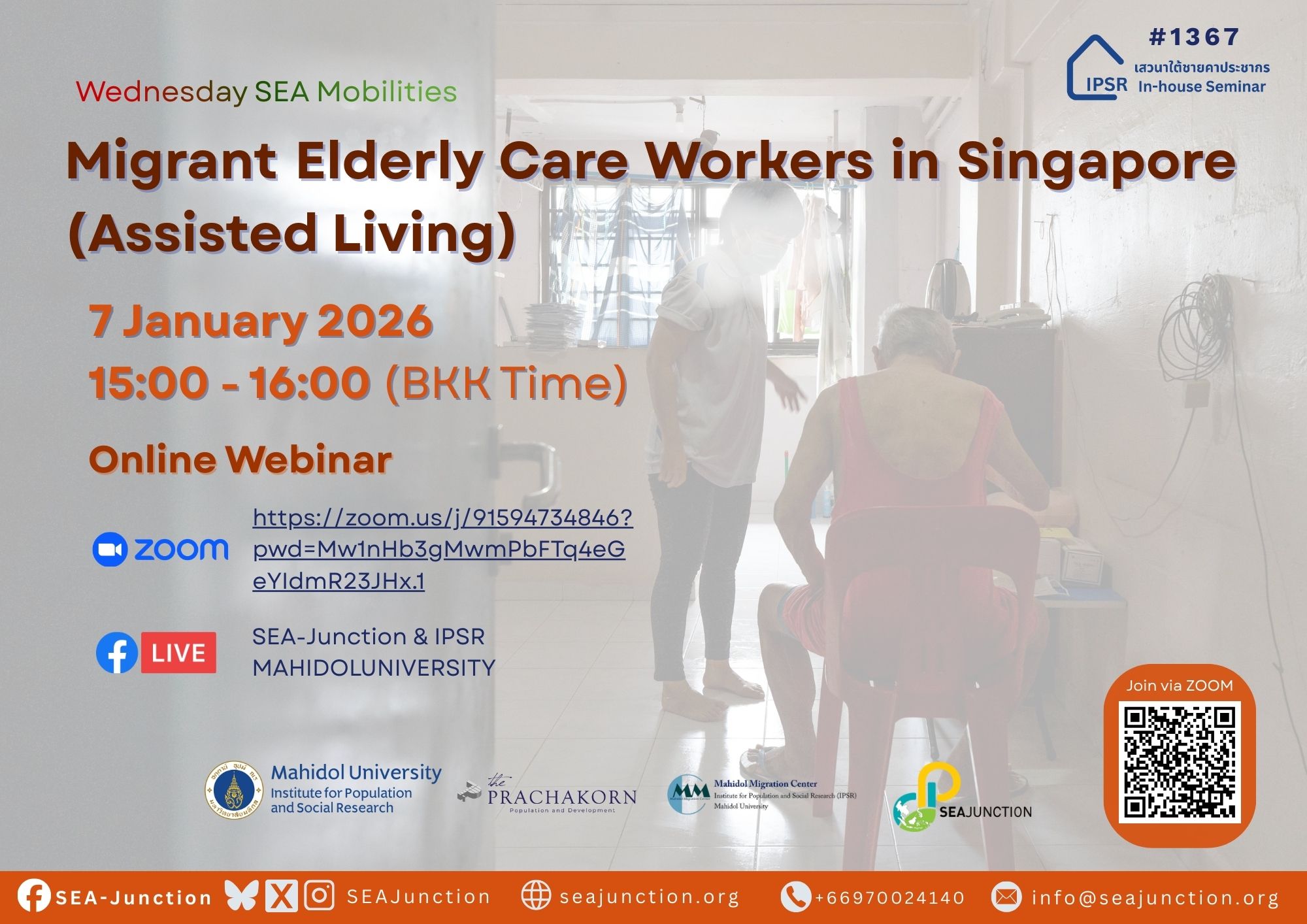
A recent Wednesday SEA Mobilities seminar focused on Singapore’s emerging assisted-living model that extend beyond traditional nursing homes and individual domestic caregiving.
Dr. Sng Hock Lin ( Singapore’s Agency for Integrated Care) explained that 2026 marks a turning point for Singapore as it becomes a super-aged society, with more than 21 percent of the population aged 65 and above. He outlined key national initiatives launched in 2023, including Healthier Singapore , rapid expansion of Active Ageing Centres and the Silver Generation Office’s door-to-door outreach model that addresses seniors’ physical, mental, social, and financial needs. He also shared the insights about the importance of recognising caregivers’ contributions amid Singapore’s space and affordability constraints, positioning assisted living as a vital middle option in the care continuum.
Dr. Belinda Wee (St Bernadette Lifestyle Village and the Assisted Living Facilities Association of Singapore) stressed the urgency of assisted living policy in Singapore, pointing to rapid ageing, rising numbers of seniors living alone, and increasing disability and social isolation. She explained that assisted living emerged to bridge the gap between home-based care and nursing homes, responding to seniors’ unmet needs for social care and support with instrumental activities of daily living (IADLs). Drawing on the experience of St. Bernadette Lifestyle Village, she emphasized assisted living as a home-like, community-based model rather than an institution and challenged the assumption that families are the main care workforce, highlighting heavy reliance on migrant caregivers.
Dr. Stephanie Chok (HOME Singapore) highlighted structural gaps for migrant caregivers, arguing that while eldercare policies emphasize dignity and autonomy for seniors, they fail to provide equivalent protections for migrant caregivers. She highlighted how care work is devalued by being conflated with domestic work under a single work permit system, leaving workers without Employment Act coverage, adequate rest, or job security, and questioned whether state revenues from foreign worker levies should be used to strengthen care infrastructure and worker welfare. She concluded that training alone is insufficient without fair pay, labor protections, and regional cooperation to address recruitment fees, social protection, and long-term security for migrant care workers.
The seminar highlighted that sustainable ageing in Singapore requires not only innovative care models and preventive policies, but also the recognition, protection, and fair treatment of migrant caregivers as essential pillars of the eldercare system.
The full video of the event is embedded below for viewing, or click here to watch it on the SEA Junction YouTube channel.
Learn more about the event on the https://seajunction.org